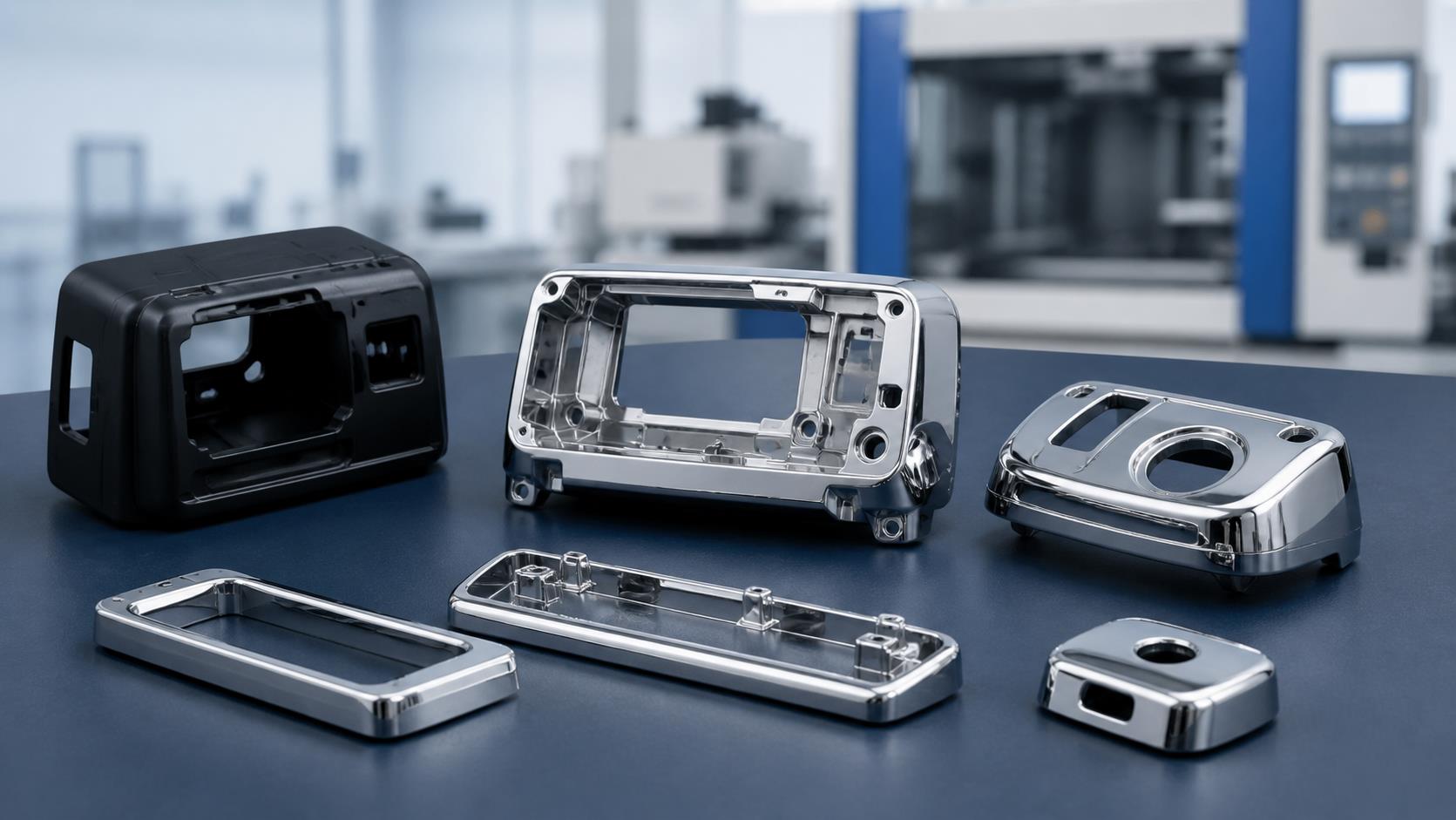
Compared with metal components, electroplated plastic parts can achieve an attractive metallic appearance while remaining lightweight. Electroplating can improve decorative quality and may also enhance selected electrical, thermal and corrosion-resistance properties.
A smooth, bright and durable plated surface depends on much more than the plating bath. Plastic material, component geometry, mold design, injection molding conditions and post-molding handling all influence coating uniformity and adhesion. These requirements should be considered from the beginning of product development.
1. Choose a Plastic Suitable for Electroplating
Not every plastic can develop a reliable bond with metallic coatings. The substrate must be compatible with etching, activation, metallization and electroplating while still meeting mechanical and dimensional requirements.
| Plastic | Plating suitability | Practical consideration |
|---|---|---|
| ABS | Widely used and highly practical | Its surface structure can be etched effectively to create strong mechanical adhesion. |
| PP | Suitable for selected applications | Requires a process developed for the specific grade and surface chemistry. |
| PC and PC blends | Possible with specialized treatment | Check chemical resistance, stress and dimensional requirements. |
| PSF and PTFE | More difficult | Specialized activation and strict process control are normally required. |
2. How Multilayer Plating Improves Corrosion Resistance
Decorative chromium systems rely on the interaction between several metal layers, not only total coating thickness. A properly designed structure distributes and redirects corrosion before it can reach the plastic substrate.
Corrosion Through Micropores
Nickel exposed through discontinuous micropores in the chromium begins to corrode. The large number of pores spreads current over a wider area and reduces the localized corrosion rate.
Bright Nickel Layer
When corrosion reaches bright nickel, the potential difference changes the attack path. Bright nickel becomes preferentially attacked while direct penetration is slowed.
Semi-Bright Nickel Layer
The potential difference between bright and semi-bright nickel encourages lateral corrosion through the bright layer instead of direct movement toward the substrate.
3. Optimize Plastic Part Design for Plating
Use Uniform Wall Thickness
Metallic finishes emphasize sink marks and waviness. Avoid large wall transitions and provide adequate rigidity. Sections below about 1.5 mm may be more vulnerable to deformation in some applications.
Avoid Blind Holes
Trapped chemicals are difficult to rinse and may contaminate later tanks. Geometry should allow treatment and rinse solutions to drain freely.
Round Sharp Corners
Sharp edges attract excessive deposition. Smooth transitions improve uniformity. A radius of about 0.3 mm or larger is a useful starting guideline where design allows.
Limit Deep Recesses
Deep grooves may receive too little metal while protrusions may burn. Prefer groove depths no greater than about one-third of groove width and use rounded bottoms.
Provide Racking Areas
Reliable electrical contact is essential. A plastic plated part may need a rack contact area about 2 to 3 times larger than a comparable metal part.
Design for Easy Release
Forced ejection can scratch, distort or stress the molding. Align textures with the release direction and avoid metal inserts where pretreatment may attack them.
4. Mold Design and Manufacturing Requirements
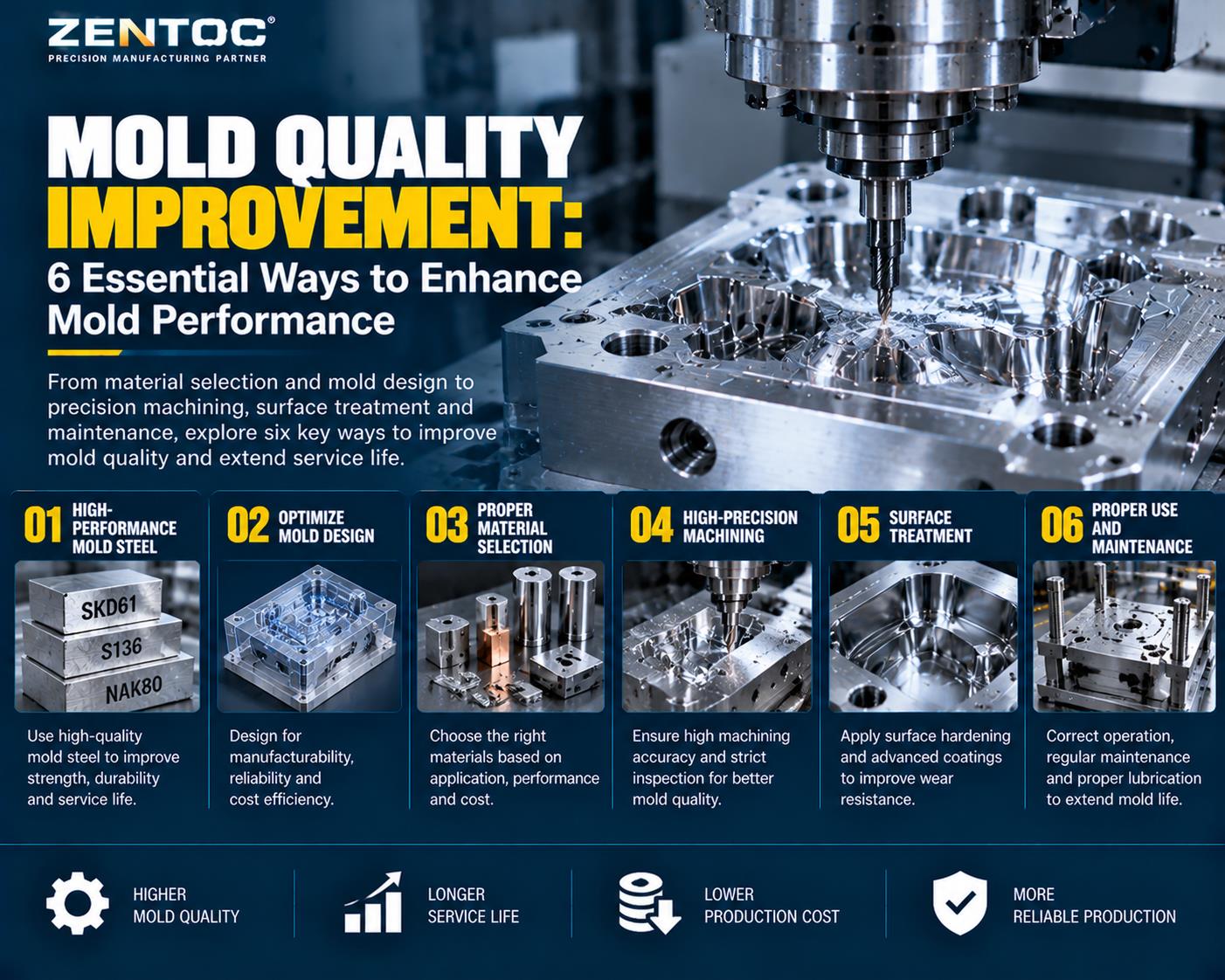
Electroplating magnifies surface imperfections. Scratches, machining marks, weld lines and ejection damage that seem minor on an uncoated molding can become highly visible after metallization.
High-Quality Cavity Surface
Polish visible cavity areas and eliminate scratches, pits and uneven texture that could transfer to the plastic.
Cosmetic Surface Planning
Keep parting lines, weld lines and core insert lines away from important visible plated surfaces whenever possible.
Gate and Runner Design
Position the gate near a thicker section, use smooth short flow paths and consider a gate about 10 percent larger than a conventional starting design when process conditions support it.
Venting and Ejection
Adequate venting reduces gas marks and bubbles. A balanced ejection system prevents scratches, deformation and residual stress.
5. Select Appropriate Injection Molding Equipment
The molding machine must produce a stable, contamination-free part without excessive internal stress. Machine size, injection unit condition, nozzle configuration and pressure control should match the resin and component. Equipment selection must consider both molding performance and downstream surface treatment.
6. Control the Injection Molding Process
Residual stress cannot always be eliminated, but it can be minimized. Excessive stress may cause warpage, cracking, poor metal adhesion, coating cracks and delamination.
Material Preparation
Dry resin correctly
Prevent contamination
Control regrind according to the qualified process
Filling and Packing
Optimize melt and mold temperature
Control injection speed and pressure
Use suitable holding pressure and time
Cooling and Release
Provide sufficient cooling time
Avoid forced ejection
Confirm dimensional stability before plating
7. Post-Molding Treatment and Handling
Residual stress can cause uneven etching and make activation more difficult. Where validated, heat treatment and appropriate surface conditioning can reduce stress and improve adhesion.
Protect the Surface
Separate or individually protect parts during storage and transportation to prevent scratches, impact and rubbing.
Prevent Contamination
Keep critical surfaces free from fingerprints, oil, dust and release agents. Inspectors should use clean, oil-free gloves.
8. Plastic Electroplating Quality Checklist
Select a resin grade qualified for the planned plating process.
Use uniform wall thickness and plating-friendly geometry.
Avoid blind holes, sharp edges and excessively deep recesses.
Provide adequate rack contact and drainage areas.
Manufacture a highly polished, defect-free mold surface.
Optimize gates, runners, venting and ejection.
Control molding parameters to minimize residual stress.
Protect molded surfaces from scratches and contamination.
Validate pretreatment, multilayer plating and adhesion performance.
Frequently Asked Questions
Why is ABS commonly used for plastic electroplating?
ABS combines useful molding and mechanical properties with a surface morphology that can be selectively etched, creating a strong foundation for activation and metal deposition.
Why do sharp corners create plating problems?
Current density tends to concentrate at edges and protrusions. This can cause excessive buildup, roughness or burning while recessed areas receive less metal.
How does residual stress affect coating adhesion?
Stress can cause uneven etching, dimensional change and cracking. These conditions weaken the interface and may lead to peeling or delamination.
Can plating quality be improved only by changing bath parameters?
No. Material, component geometry, mold finish, molding conditions, handling and pretreatment must be controlled as one connected manufacturing process.
Need Custom Plastic Components with Premium Surface Finishes?
Zentoc supports product development, mold manufacturing, injection molding and custom production for precision plastic and metal components.
Contact Zentoc