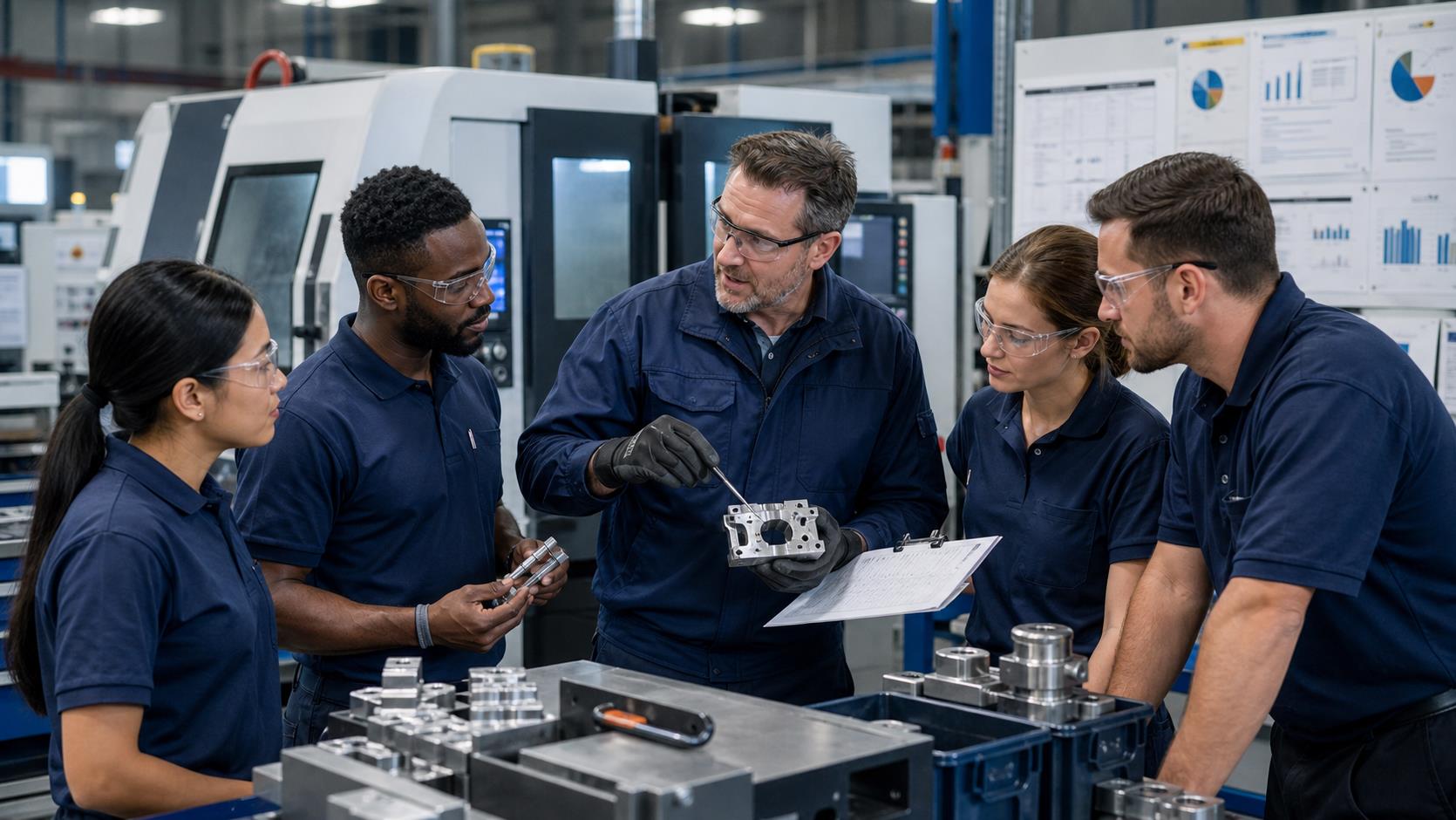
In manufacturing, the ability of a production team leader directly affects the performance of the entire frontline team. Employees often view their supervisor as the group's most experienced problem solver and practical source of guidance.
A strong team leader does more than complete daily production tasks. They clarify goals, develop employee skills, solve process problems, maintain standards, build trust, and create the conditions for a high-performing manufacturing team.
Five Questions Every Manufacturing Team Leader Should Ask
Are Goals Clear?
Is Training Effective?
Can People Learn?
Do I Give Support?
Do I Set the Example?
1. Have I Provided Clear Goals?
Employees bring different expectations, experience levels, career stages, and personalities to the workplace. Effective leaders understand these differences and help each person connect individual development with the team's production objectives.
When personal goals align with company goals, leaders should encourage progress and provide opportunities. When they differ, the leader should explain the importance of collective objectives and show how reliable performance, new skills, and greater responsibility can support personal growth.
Practical leadership: Goals should be specific enough to guide daily action and meaningful enough for employees to understand why their work matters.
2. Have I Provided the Right Methods and Training?
A manufacturing supervisor is also a coach and trainer. When an employee makes a mistake, repeated criticism rarely solves the underlying problem. The leader should first determine whether the cause is missing knowledge, insufficient skill, unclear instructions, an unsuitable method, or inadequate training.
A practical training sequence is:
TellExplain the correct method and expected result clearly.
ShowDemonstrate the operation safely, step by step.
TryLet the employee practice and build hands-on experience.
FeedbackRecognize correct actions and explain necessary adjustments.
Follow UpCheck that the new skill is applied consistently in production.
This cycle converts instructions into demonstrated competence and gives the leader an opportunity to correct misunderstandings before they become quality or safety problems.
3. Have I Given Employees Opportunities to Make Mistakes?
A workplace that demands zero mistakes in every learning situation can reduce confidence, initiative, and creativity. Employees may avoid responsibility because they fear criticism or punishment.
A more constructive principle is: employees may make a reasonable mistake while learning, but the team should analyze it and prevent repetition. This approach combines psychological safety with accountability.
Allow controlled trials of better methods
Protect safety and critical quality requirements
Analyze root causes instead of assigning blame
Standardize improvements after learning
Share lessons with the wider team
Prevent the same error from recurring
4. Have I Provided Enough Encouragement and Support?
Employees encounter uncertainty, production pressure, unfamiliar tasks, and difficult problems. Constructive support from a leader can help them overcome fear, build confidence, and improve performance.
When someone performs poorly, the team leader should ask whether expectations were clear, sufficient training was provided, feedback was timely, and the employee had access to help.
Effective encouragement is specific and honest. It recognizes what was done correctly, identifies the next improvement, and gives the employee confidence that progress is possible.
5. Am I Setting a Good Example?
Frontline employees naturally respect leaders who understand the work, take responsibility, remain calm under pressure, and solve problems that others cannot. Leadership credibility begins with personal behavior.
A strong manufacturing team leader demonstrates:
Professional and process knowledge
Responsibility for results
Continuous learning
Practical problem-solving ability
Compliance with safety and quality rules
Respectful communication
Leadership reflection: Am I improving myself, using better methods, and demonstrating the standards I expect from the team?
Seven Principles for Building Leadership Authority
Formal authority comes from a job title. Lasting authority comes from employee trust, respect, fairness, competence, and consistent behavior.
DiligenceLead by example through hard work, responsibility, professionalism, and active problem solving.
IntegrityTreat employees respectfully, provide honest guidance, and maintain strong ethical standards.
FairnessMake objective decisions, avoid favoritism, and apply standards consistently across the team.
PerformanceEarn credibility by achieving targets, improving efficiency, solving problems, and delivering measurable results.
Effective MeetingsUse focused daily communication to clarify goals, assign work, coordinate resources, and identify obstacles.
InspectionMonitor critical details, identify deviations early, maintain standards, and prevent quality problems.
RelationshipsCombine logical management with genuine care, listening, understanding, and mutual trust.
Using Meetings and Inspection Effectively
Daily Production Meetings
A useful shop-floor meeting is short, focused, and action-oriented. It communicates the shift target, quality and safety priorities, assignments, material or equipment constraints, abnormal conditions, and unresolved actions.
The meeting should make ownership and deadlines clear rather than becoming a one-way speech or general criticism session.
Production Inspection
Inspection is not limited to checking finished parts. Leaders should observe process discipline, standard work, equipment condition, material identification, tooling, workplace organization, safety, and the team's response to abnormalities.
Timely checks help detect problems before they grow into scrap, delays, customer complaints, or safety incidents.
Manufacturing Team Leader Checklist
Communicate clear shift, quality, safety, and delivery goals.
Match assignments and coaching to employee skill levels.
Teach by explaining, demonstrating, observing, and following up.
Analyze mistakes and prevent recurrence without creating fear.
Provide specific feedback, encouragement, and practical support.
Apply rules and decisions fairly across the team.
Lead concise meetings with clear actions and ownership.
Inspect processes and standards before problems become serious.
Solve frontline obstacles and escalate issues promptly.
Continuously improve personal technical and leadership ability.
Frequently Asked Questions
What is the main role of a manufacturing team leader?
The role is to translate production objectives into safe, coordinated daily execution while developing employees, maintaining standards, solving problems, and delivering quality results.
How should a supervisor respond when an employee makes a mistake?
Protect safety and quality first, then identify the root cause, coach the correct method, allow supervised practice, and verify that the error does not recur.
How can a new team leader build authority?
Be technically prepared, work diligently, make fair decisions, communicate respectfully, solve real production problems, keep commitments, and apply standards consistently.
What makes a daily production meeting effective?
It should be brief and specific, covering goals, safety, quality, assignments, current abnormalities, responsible people, and deadlines for action.
Why is employee encouragement important in manufacturing?
Specific encouragement builds confidence, supports learning, strengthens problem-solving behavior, and helps employees remain engaged during difficult production situations.
Conclusion
An excellent manufacturing team leader is more than a production supervisor. They are a trainer who develops people, a problem solver who improves processes, a role model who demonstrates responsibility, and a leader who earns trust.
By asking the five leadership questions and applying the seven principles, frontline supervisors can improve employee performance, strengthen team culture, prevent production problems, and create more stable and efficient manufacturing operations.