Metal heat treatment modifies the microstructure and mechanical properties of metals through controlled heating, holding and cooling. In overall heat treatment, the entire workpiece is processed to achieve the required hardness, strength, toughness, machinability and dimensional stability.
Annealing, normalizing, quenching and tempering are four fundamental steel heat treatment processes. Understanding how they differ helps manufacturers select the correct treatment and reduce deformation, internal stress and cracking.
1. What Is Metal Heat Treatment?
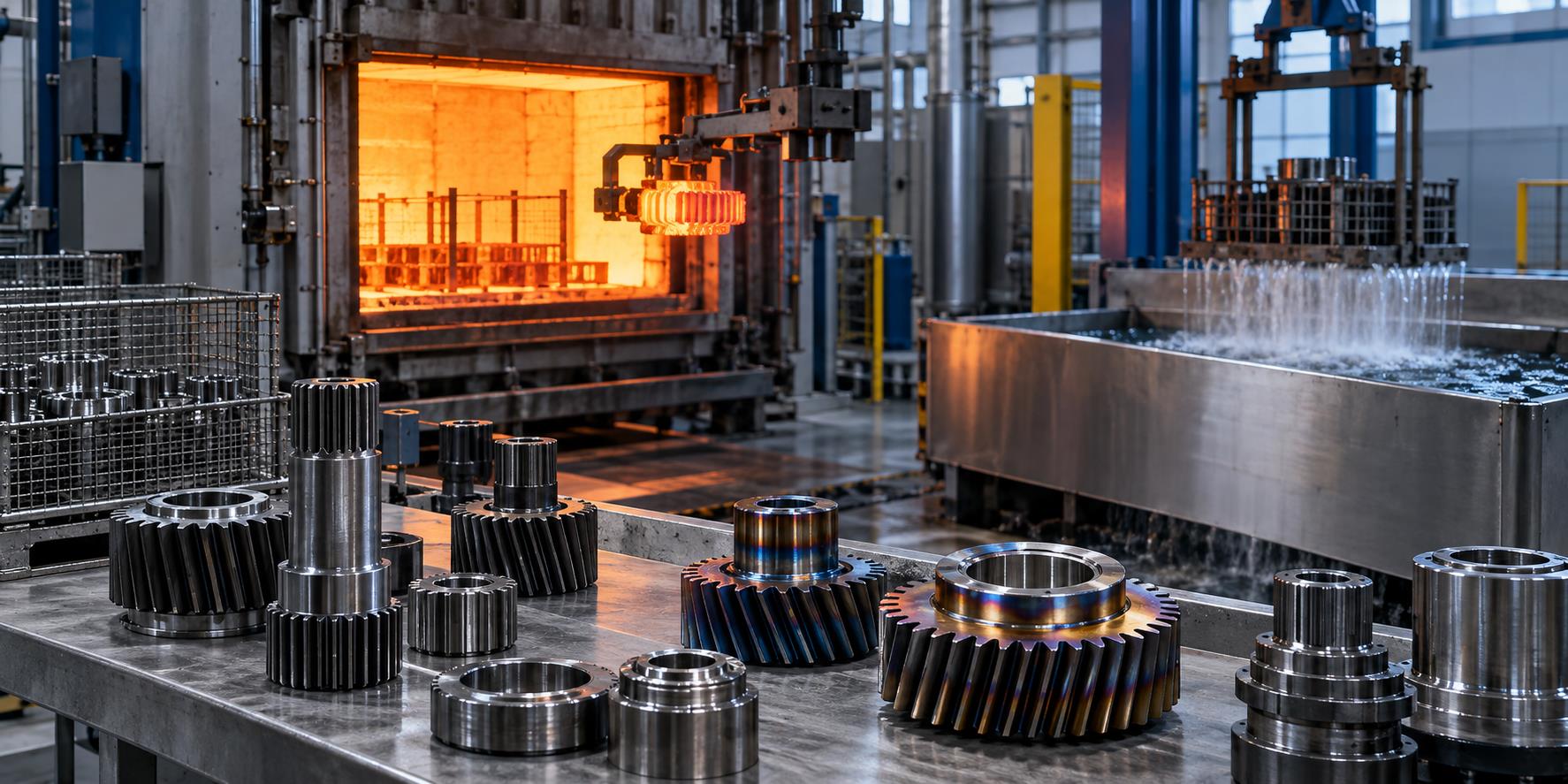
Heat treatment uses a controlled thermal cycle to change a metal's microstructure without changing the component's basic shape. Temperature, holding time and cooling rate determine the final material properties.
1.1 Heating
The entire workpiece is heated to a temperature selected for its alloy, structure and intended result.
1.2 Holding
The component remains at temperature long enough to develop a uniform and suitable microstructure.
1.3 Cooling
Slow furnace cooling, air cooling or rapid quenching produces different structures and mechanical properties.
2. Annealing Heat Treatment
Annealing heats a workpiece to an appropriate temperature, holds it according to material and section size, and then cools it slowly, usually together with the furnace. In steel, austenite forms during heating and transforms toward pearlite during slow cooling.
2.1 Reduce Hardness
Annealing softens steel and increases plasticity, making later machining and cold forming easier.
2.2 Refine the Structure
It can refine grains and reduce microstructural defects caused by forging, welding and other manufacturing operations.
2.3 Improve Uniformity
Annealing makes the steel microstructure and composition more uniform and prepares it for later thermal processing.
2.4 Relieve Internal Stress
Reducing residual stress helps prevent deformation and cracking during machining or service.
Because of these effects, annealing is often used as a preparatory heat treatment before machining, forming or quenching.
3. Normalizing Heat Treatment
Normalizing heats the workpiece to an appropriate temperature and then cools it in still air. Its effects are similar to annealing, but the faster cooling rate generally produces a finer microstructure.
3.1 Improve Machinability
Normalizing can provide a more suitable structure and hardness for subsequent machining.
3.2 Refine Grain Structure
Air cooling usually creates a finer structure than slow furnace cooling.
3.3 Final Treatment Option
For components with moderate performance requirements, normalizing may serve as the final heat treatment.
3.4 Annealing vs Normalizing
Annealing normally uses slow furnace cooling, while normalizing uses air cooling and typically results in greater hardness and a finer structure.
4. Quenching Heat Treatment
Quenching heats steel above its critical transformation temperature, holds it for a specified period and then cools it rapidly in a suitable medium. Rapid cooling forms martensitic and/or bainitic structures and significantly increases hardness.
| Quenching Medium | General Characteristic | Process Consideration |
|---|---|---|
| Water | High cooling severity | Fast cooling but greater risk of stress, deformation and cracking |
| Oil | More moderate cooling | Often reduces thermal shock compared with water |
| Inorganic salt solution | Controlled high-rate cooling | Selected according to steel grade and required response |
| Organic aqueous solution | Adjustable cooling behavior | Concentration and agitation influence the cooling curve |
4.1 Main Purpose
The primary goal is to transform supercooled austenite into martensite or bainite and obtain high hardness and strength.
4.2 Important Limitation
As-quenched steel is hard but brittle and usually contains high residual stress, so it is rarely suitable for direct service.
5. Tempering After Quenching
Tempering reheats quenched steel to a selected temperature above room temperature but below 710 degrees C, holds it and then cools it in a controlled manner. It adjusts the quenched structure and reduces brittleness.
5.1 Adjust Mechanical Properties
Tempering balances hardness, strength and toughness so the component can meet service requirements.
5.2 Stabilize Microstructure
It reduces the likelihood of further structural transformation during use.
5.3 Improve Dimensional Stability
A more stable structure helps the workpiece maintain its dimensions and shape.
5.4 Reduce Stress and Cracking
Tempering lowers quenching stress, minimizes deformation and reduces cracking risk.
6. Annealing vs Normalizing vs Quenching vs Tempering
| Heat Treatment | Basic Process | Cooling Method | Main Purpose |
|---|---|---|---|
| Annealing | Heat and hold at an appropriate temperature | Slow cooling, typically in the furnace | Reduce hardness, improve plasticity and machinability, refine structure and relieve stress |
| Normalizing | Heat to an appropriate temperature | Air cooling | Refine microstructure and improve machinability |
| Quenching | Heat above the critical point and hold | Rapid cooling in water, oil or another medium | Form martensite and/or bainite and increase hardness |
| Tempering | Reheat quenched steel below 710 degrees C and hold | Controlled cooling after holding | Reduce brittleness and stress, stabilize the structure and adjust properties |
7. Why Are Quenching and Tempering Used Together?
Quenching creates a hard martensitic or bainitic structure, but it also increases brittleness and residual stress. Tempering then modifies that structure to achieve a more useful balance of hardness, strength, toughness and dimensional stability.
7.1 Quenching
Provides the hard base structure required for high mechanical performance.
7.2 Tempering
Relieves stress and adjusts brittleness without discarding all of the hardness gained.
7.3 Combined Result
Produces properties tailored to the actual load, wear and toughness requirements of the component.
Depending on the material and application, one or more tempering operations may be required after quenching.
8. How to Select a Steel Heat Treatment Process
8.1 Required Properties
Define the target hardness, strength, toughness, wear resistance, machinability and dimensional stability.
8.2 Material and Section Size
Steel composition, hardenability, geometry and wall thickness affect heating, holding and cooling response.
8.3 Manufacturing Sequence
Use annealing or normalizing before machining when necessary, and schedule quenching and tempering around final machining and grinding allowances.
8.4 Distortion and Crack Risk
Select suitable fixturing, heating uniformity and cooling severity to control thermal stress and dimensional change.
Conclusion
Annealing reduces hardness, improves plasticity and machinability, refines the microstructure and relieves internal stress. Normalizing uses air cooling to produce a generally finer structure. Quenching rapidly cools steel to form martensitic and/or bainitic structures and increase hardness. Tempering follows quenching to reduce brittleness and stress while stabilizing the microstructure.
Understanding these four metal heat treatment processes helps manufacturers choose suitable thermal cycles, control material properties and achieve more consistent performance in precision metal components.
Metal Heat Treatment FAQ
What is the main difference between annealing and normalizing?
Annealing normally uses slow furnace cooling, while normalizing uses air cooling. Normalizing generally produces a finer and somewhat harder structure.
Why is quenched steel usually tempered?
Quenching increases hardness but also creates brittleness and residual stress. Tempering reduces these problems and adjusts the final balance of properties.
Which heat treatment improves machinability?
Annealing and normalizing can both improve machinability. The correct choice depends on steel grade, starting structure and required final properties.
What cooling media are used for quenching?
Common media include water, oil, inorganic salt solutions, organic aqueous solutions and other media selected for the alloy and required cooling rate.
Does heat treatment change component dimensions?
It can. Thermal expansion, phase transformation and residual stress may cause deformation, so process design and dimensional allowance are important.
Need Precision Heat-Treated Metal Components?
Zentoc provides CNC machining, precision metal component manufacturing and customized production solutions.
Contact Zentoc