Titanium alloys are widely used in aerospace, medical devices, automotive, and high-performance engineering because of their excellent strength-to-weight ratio, corrosion resistance, and high-temperature capability. However, CNC machining titanium remains a demanding task for manufacturers.
Titanium is difficult to machine not simply because of hardness. The real challenge comes from the interaction of concentrated cutting heat, low thermal conductivity, chemical reactivity, elastic deformation, work hardening, and rapid tool wear.
Why Heat Is the Main Challenge in Titanium Machining
The cutting force required for titanium may be only slightly higher than for steel of similar hardness, yet the thermal and chemical behavior at the cutting edge is far more severe. Titanium's low thermal conductivity prevents heat from dispersing efficiently through the workpiece and chips.
of the thermal conductivity of steel
of the thermal conductivity of aluminum
As a result, much of the cutting heat remains concentrated in a small tool–chip contact zone. Local temperatures can exceed 1,000°C, contributing to rapid cutting-edge wear, chipping, built-up edge, coating damage, and shortened tool life.
Self-accelerating cycle: A worn cutting edge generates more friction and heat, and the additional heat accelerates wear even further.
How Heat Affects Titanium Part Quality
Excessive temperature affects more than the tool. It can also alter the surface integrity and functional performance of the machined titanium component.
Reduced dimensional accuracy
Surface integrity problems
Localized work hardening
Lower fatigue performance
Higher residual stress risk
Inconsistent surface finish
Titanium's elasticity adds another difficulty. The material can deflect away from the tool and spring back after the cutting edge passes. This encourages rubbing between the tool flank and the recovered surface, producing more friction, heat, vibration, and dimensional variation.
Challenges When Machining Thin-Walled Titanium Parts
Thin walls, rings, ribs, and lightweight aerospace structures are especially sensitive to cutting load and thermal distortion. The cutting force can push a flexible feature away from the programmed toolpath, while excessive elastic deformation may eventually become permanent plastic deformation.
Repeated tool passes can also harden the previously machined surface. If cutting data are not adjusted, the original speed and engagement may become too aggressive for the hardened layer, resulting in accelerated wear, unstable cutting, chatter, and poor surface quality.
Machining priority: Control cutting force, heat, engagement, and part support together. Reducing only one factor may not be enough for accurate thin-wall production.
Key Techniques for CNC Machining Titanium Alloys
Use Positive Cutting GeometrySharp positive-rake tools reduce cutting force, heat generation, and workpiece deformation.
Maintain a Constant FeedKeep the cutting action stable and avoid unnecessary dwelling or rubbing that can promote work hardening.
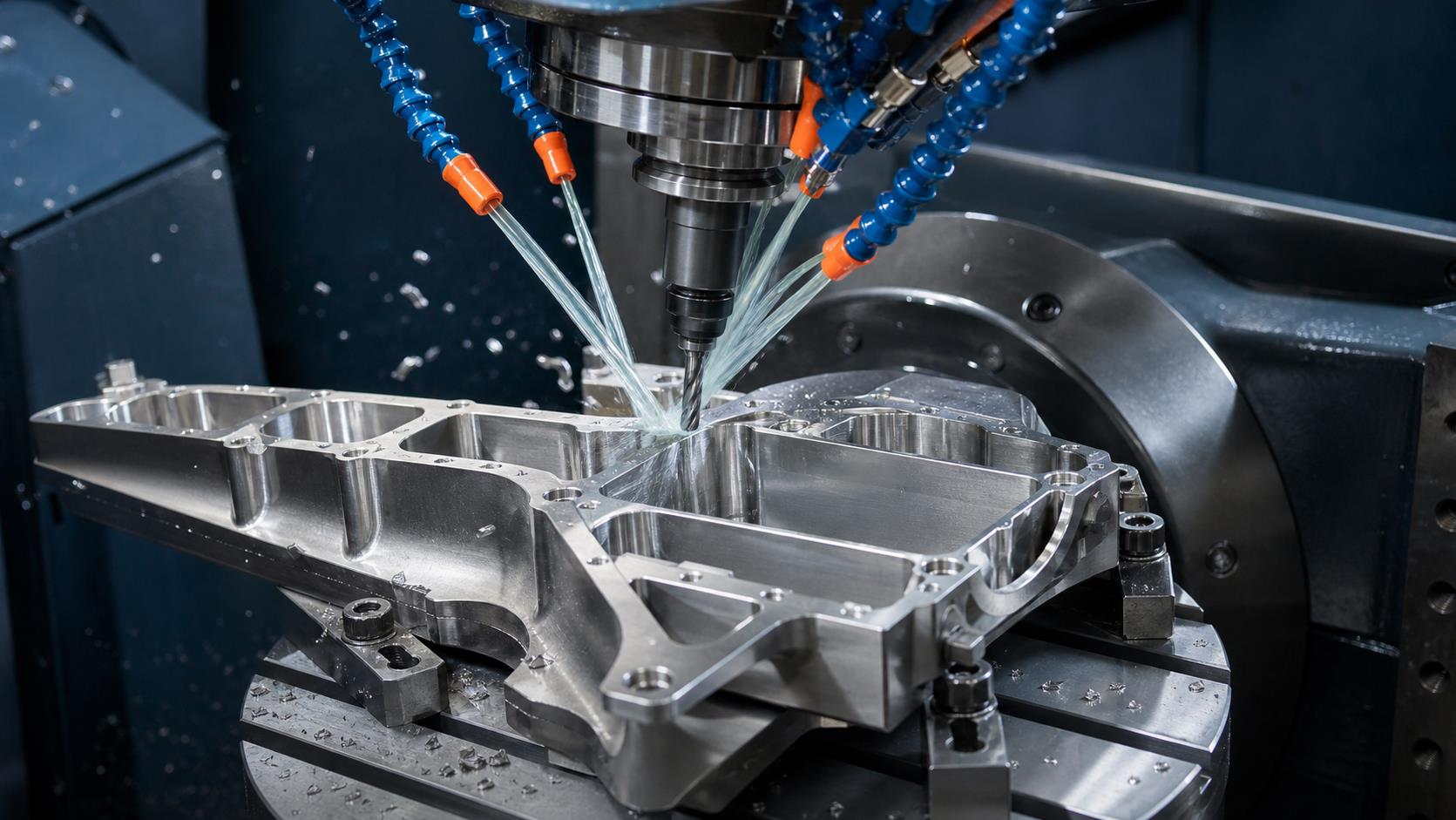
Apply High-Pressure CoolantDeliver high-volume coolant directly to the cutting zone for heat removal, chip control, and tool protection.
Keep Cutting Edges SharpReplace worn tools before friction, temperature, and cutting load rise sharply.
Machine Before Heat TreatmentWhen product requirements permit, machine titanium in its softer condition before final hardening.
Distribute the Cutting LoadA suitable nose radius or chamfer can spread load and heat across more of the cutting edge.
Use Stable Radial Engagement
During titanium milling, controlled radial engagement helps maintain a stable chip thickness and provides time for the cutting edge to cool between engagements. A radial depth of cut (ae) around 30% of cutter diameter is sometimes used as a starting reference, but the optimum value depends on the tool, operation, machine rigidity, and manufacturer's cutting data.
Selecting the Right Cutting Tools for Titanium
Successful titanium machining requires a complete tool solution rather than a general-purpose cutter. Tool substrate, edge preparation, rake geometry, coating, flute design, and coolant access must work together.
Suitable titanium tooling commonly emphasizes:
Sharp, positive cutting geometry
Strong edge support against chipping
Heat- and wear-resistant tool materials
Coatings compatible with titanium's chemical behavior
Efficient chip evacuation
Direct coolant delivery to the cutting edge
Notch Wear, Chemical Reaction, and Built-Up Edge
A common titanium tool failure is notch wear near the depth-of-cut line. It may be promoted by hardened surface layers from previous passes, repeated contact at the same boundary, chemical interaction between titanium and the tool, and diffusion at temperatures above approximately 800°C.
Under high pressure and temperature, titanium can adhere or weld to the rake face and form a built-up edge. When the adhered material breaks away, it may pull coating or carbide particles from the cutting edge, rapidly accelerating failure.
Stable engagement, sharp tools, suitable coatings, effective cooling, and careful management of the depth-of-cut boundary help reduce these wear mechanisms.
Tool Design for Efficient Titanium Machining
Specialized titanium milling cutters are designed around heat management and reliable chip removal. Important design features can include optimized flute geometry, generous chip space, strong but sharp cutting edges, and internal coolant passages aimed directly at the cutting zone.
When combined with the correct process, these features can provide:
Lower cutting-zone temperature
Reduced edge wear and chipping
More reliable chip evacuation
Improved machining stability
Longer and more predictable tool life
Better titanium surface integrity
Titanium Machining Checklist
Confirm titanium grade, condition, and heat-treatment status.
Select titanium-specific tool material, coating, and geometry.
Use the shortest practical, most rigid tool setup.
Maintain positive chip formation and avoid dwelling.
Control cutting speed before increasing engagement.
Deliver sufficient coolant directly to the cutting edge.
Monitor notch wear, built-up edge, and edge chipping.
Support thin walls and plan the machining sequence carefully.
Frequently Asked Questions
Why is titanium difficult to CNC machine?
Titanium combines low thermal conductivity, chemical reactivity, elasticity, and a tendency to work harden. Heat remains concentrated at the cutting edge, accelerating wear and making the process sensitive to rubbing and instability.
Why is coolant so important when machining titanium?
Titanium does not conduct heat away efficiently. High-pressure, high-flow coolant removes heat from the cutting zone, improves chip evacuation, reduces adhesion, and helps extend tool life.
Should titanium be machined at high cutting speeds?
Generally, titanium requires lower cutting speeds than aluminum or many steels because speed strongly affects cutting temperature and tool life. Always begin with tool-manufacturer data for the titanium grade and operation.
What causes built-up edge when cutting titanium?
High pressure, temperature, and titanium's chemical affinity can cause workpiece material to adhere to the rake face. When this deposit breaks away, it can damage the coating and cutting edge.
How can thin-wall titanium deformation be reduced?
Use sharp positive tools, low and stable cutting forces, rigid support, suitable toolpaths, controlled engagement, effective cooling, and a machining sequence that leaves adequate support until finishing.
Conclusion
Titanium alloy machining is challenging because heat, chemical activity, elastic deformation, and work hardening interact at the cutting edge. Stable production depends on sharp positive tools, controlled cutting parameters, rigid setups, reliable coolant delivery, effective chip evacuation, and close monitoring of tool wear.
With suitable tooling and a process designed around heat management, manufacturers can produce accurate titanium components with better surface integrity, longer tool life, and more predictable productivity.