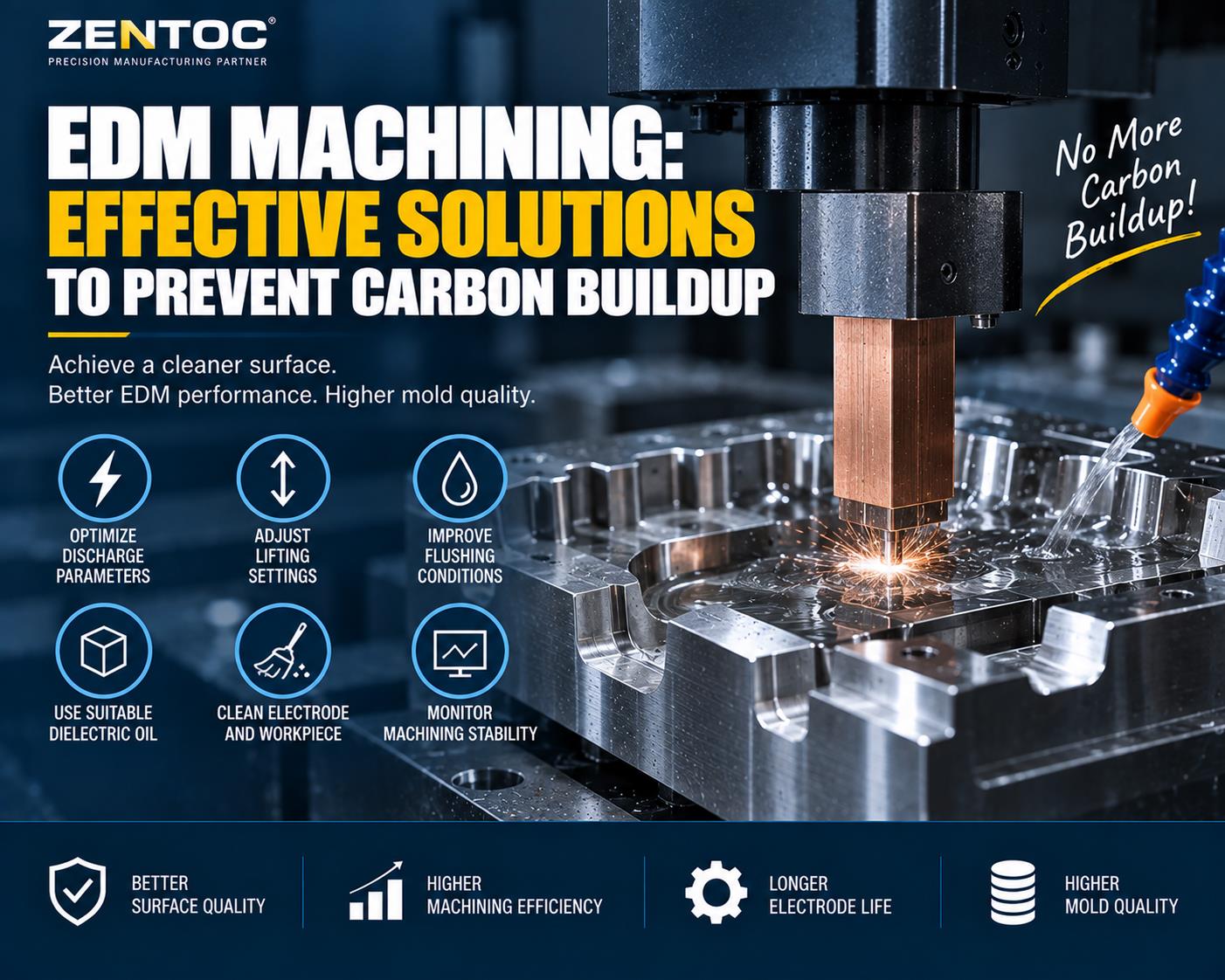
Carbon buildup in EDM machining is a serious surface-quality problem. Once unstable electrical discharge or arcing begins, carbon deposits can damage the workpiece, reduce mold quality and make later EDM operations increasingly difficult.
Modern CNC EDM machines include parameter databases and adaptive controls, but technicians still need to understand discharge behavior. This guide explains common causes of EDM carbon buildup and practical ways to prevent arcing, improve debris evacuation and maintain stable machining.
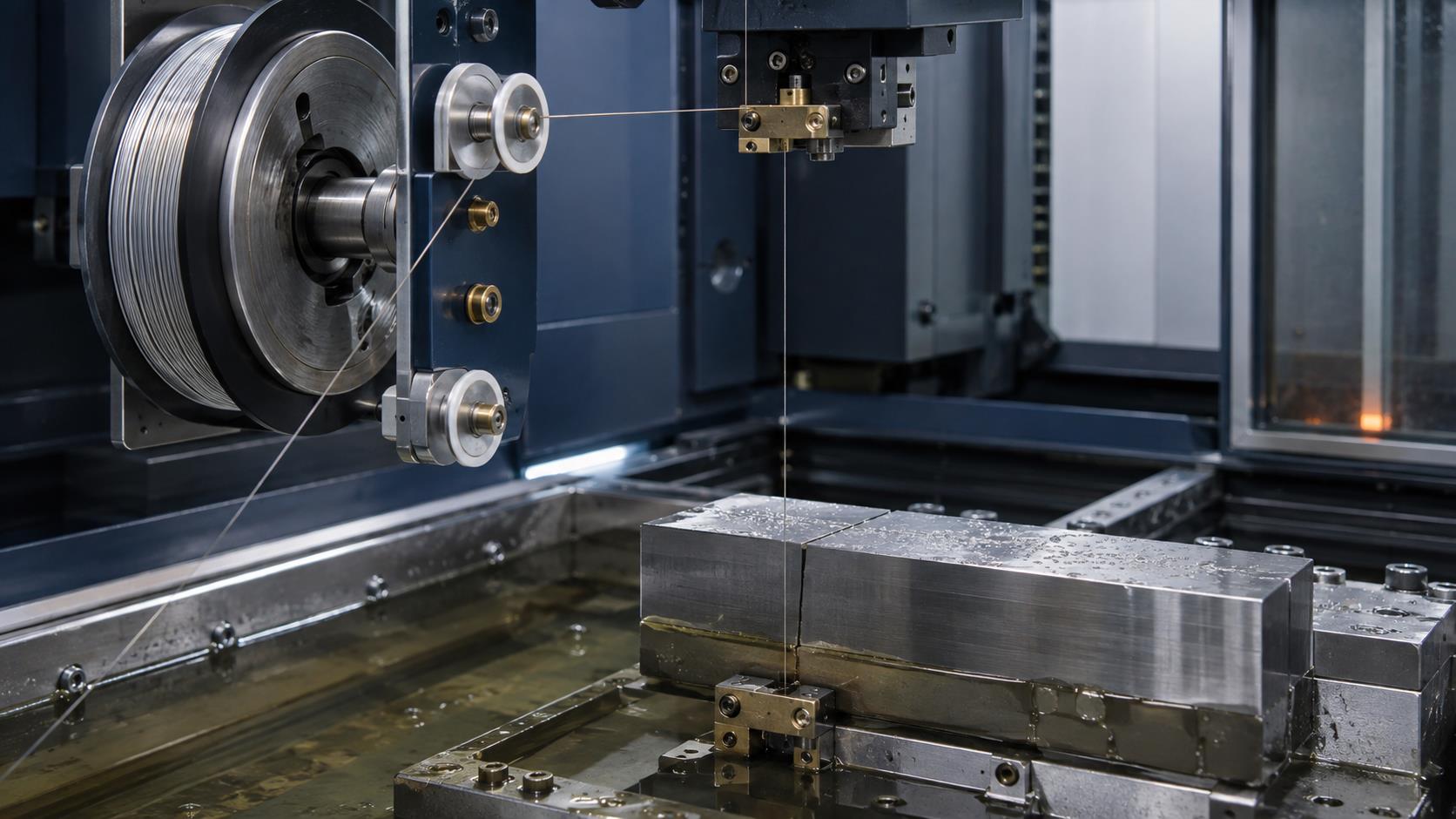
1. Common Conditions That Cause EDM Carbon Buildup
Carbon deposits do not occur randomly. They are most likely when the discharge gap is small, debris cannot escape, energy becomes concentrated or dielectric conditions are uneven.
1.1 Low-Energy Finishing
A small spark gap and weak discharge energy make eroded particles difficult to remove.
1.2 Extreme Electrode Sizes
Large-area and very small pointed electrodes can both concentrate discharge energy.
1.3 Deep Blind Cavities
Restricted dielectric circulation allows debris to accumulate and interfere with normal sparking.
2. Why Does Carbon Buildup Occur During EDM Finishing?
Rough EDM uses higher discharge energy and a larger spark gap, so eroded particles are generally removed more effectively. Finishing uses lower current and a smaller gap. Debris can remain between the electrode and workpiece, causing concentrated discharge, arcing and carbon deposits.
3. How Does Electrode Size Affect Carbon Buildup?
3.1 Large EDM Electrodes
A large discharge area may not distribute energy uniformly. Localized regions can receive concentrated discharge and develop carbon buildup.
3.2 Small or Pointed Electrodes
A very limited discharge area can receive excessive local energy, increasing the risk of unstable discharge and arcing.
4. Why Is Deep-Hole EDM More Susceptible?
Deep blind holes restrict dielectric circulation. Eroded particles accumulate inside the cavity, contaminate the spark gap and may create a continuous conductive path. Effective electrode lifting and debris removal are therefore especially important in deep-hole EDM machining.
5. Optimize EDM Electrode Lifting Parameters
If discharge time between lifting cycles is too long or lift height is too low, debris cannot leave the working gap. Finishing and deep-hole EDM are particularly sensitive to these settings.
5.1 Shorten Discharge Duration
Reduce the cutting interval between lifting cycles so contaminated dielectric is refreshed more frequently.
5.2 Increase Lift Height
A greater lift can create stronger fluid movement and give trapped particles more space to escape.
5.3 Increase Lift Speed
Faster electrode movement can improve the pumping action that exchanges dielectric fluid in the gap.
The objective is to restore clean, stable dielectric conditions before the next discharge cycle.
6. Optimize EDM Discharge Parameters
6.1 Increase Pulse-Off Time
More pulse-off time allows the dielectric to deionize and gives debris additional time to leave the gap.
6.2 Reduce Pulse Duration
A shorter pulse can help stabilize discharge, but may significantly increase electrode wear and should be adjusted carefully.
6.3 Reduce Peak Current
During roughing with a small discharge area, excessive current can concentrate energy. Lowering current may prevent arcing but will reduce machining speed.
6.4 Confirm Process Tradeoffs
Every electrical adjustment affects removal rate, electrode wear, surface finish and machining time. Change one factor at a time and observe the result.
7. Control Finishing Allowance for Large Electrodes
Bottom allowance and orbital movement should not be excessive when finishing with large electrodes. Low-energy finishing already makes chip evacuation difficult, and a long finishing cycle can further reduce stability.
Keep finishing stock as small as reasonably possible while still meeting surface roughness and dimensional requirements. Excessive finishing allowance raises both carbon-buildup risk and cycle time.
8. Optimize EDM Flushing Conditions
Incorrect flushing direction or excessive pressure can trap particles instead of removing them. Common approaches include flushing from below toward an open region or supplying dielectric oil around the machining zone.
When a machine has high-speed electrode lifting, extra flushing may not always be necessary. Poorly directed supplemental flow can create unequal dielectric pressure around the electrode.
9. Use the Correct EDM Dielectric Oil
Dielectric fluid viscosity and cleanliness affect debris evacuation. Oil that is too viscous can slow particle removal during finishing, causing black discharge spots, unstable machining and eventually serious carbon buildup.
Use clean spark-erosion oil that meets the machine, electrode, workpiece and finishing requirements. Maintain the filtration system and replace degraded fluid as required by the process.
10. Clean the Electrode and Workpiece When Discharge Becomes Unstable
If the machining condition deteriorates, stop when necessary and inspect the gap for accumulated EDM debris. Clean the electrode and workpiece before restarting. Where suitable, affected surfaces may be cleaned lightly with fine abrasive paper.
Once arcing has created carbon deposits, remove the deposits and discharge products completely. Restarting without cleaning can allow unstable discharge to continue and make normal machining extremely difficult.
11. Monitor EDM Machining Stability
11.1 Observe and Listen
Watch the discharge sparks and listen for changes from the normal, consistent EDM discharge sound.
11.2 Check Electrical Readings
Monitor current and voltage for abnormal fluctuations, concentrated discharge or signs that the gap is no longer stable.
Adjust machining conditions promptly when abnormalities appear. Allowing unstable discharge to continue increases the probability of arcing and surface damage.
12. Practical EDM Carbon Buildup Troubleshooting Order
| Step | Check or Adjustment | Main Objective |
|---|---|---|
| 1 | Inspect and clean the electrode, workpiece and discharge area | Remove conductive debris and existing carbon deposits |
| 2 | Reduce time between lifts; increase lift height and speed | Improve debris evacuation and dielectric exchange |
| 3 | Increase pulse-off time | Allow deionization and stabilize the spark gap |
| 4 | Reduce pulse duration if necessary | Control concentrated discharge while monitoring electrode wear |
| 5 | Reduce excessive current for a small discharge area | Lower local energy concentration |
| 6 | Correct flushing direction and pressure | Carry particles toward an open evacuation path |
| 7 | Check dielectric viscosity, cleanliness and filtration | Maintain stable fluid and debris-removal performance |
| 8 | Reduce excessive finishing allowance | Shorten unstable low-energy machining time |
Conclusion
Preventing carbon buildup in EDM machining depends on stable discharge conditions and effective debris evacuation. The main measures are optimizing electrode lifting, pulse-off time, pulse duration and current; controlling finishing allowance; improving flushing; using suitable dielectric oil; and cleaning accumulated discharge products.
By recognizing unstable EDM conditions early, operators can reduce arcing, protect electrodes and mold surfaces, improve EDM surface finish and achieve more consistent machining results.
EDM Carbon Buildup FAQ
What causes carbon buildup in EDM machining?
Common causes include trapped debris, a contaminated spark gap, concentrated discharge energy, inadequate electrode lifting, poor flushing and unsuitable dielectric oil.
Why is EDM finishing more likely to produce carbon deposits?
Finishing uses lower energy and a smaller spark gap, making debris evacuation and dielectric recovery more difficult.
Can increasing pulse-off time prevent EDM arcing?
It can help by allowing the dielectric to deionize and debris to leave the gap, but lifting, flushing, current and electrode geometry must also be considered.
What should be done after carbon buildup appears?
Stop if necessary, remove carbon deposits and debris from the electrode and workpiece, then correct the process condition before restarting.
Need Precision EDM and Mold Components?
Zentoc provides EDM machining, precision CNC machining and custom mold component manufacturing.
Contact Zentoc